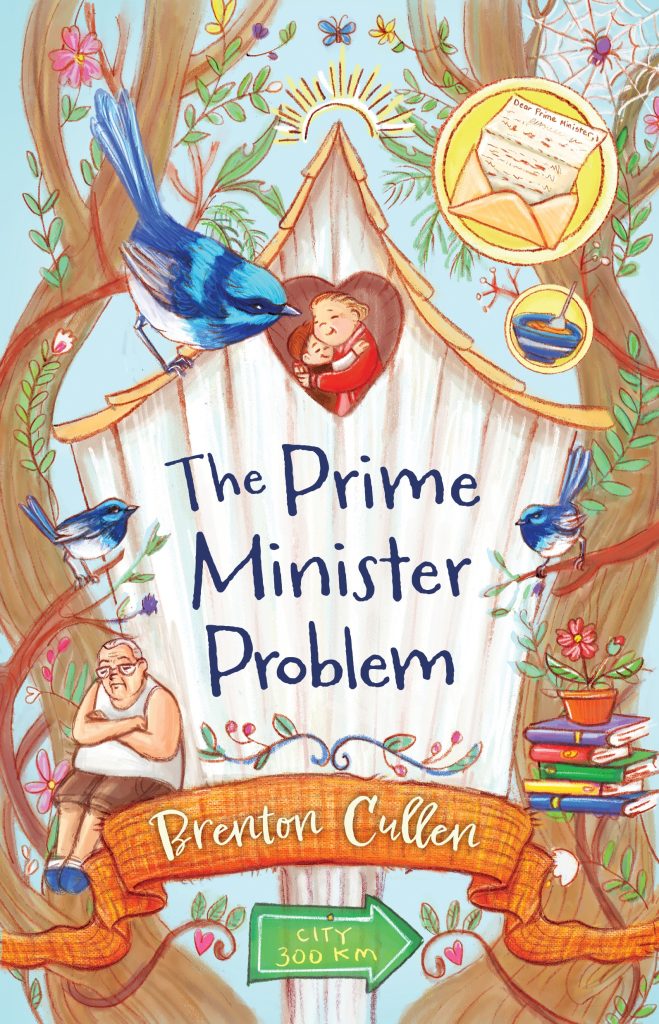
Brenton Cullen’s new book The Prime Minister Problem is a story of intergenerational friendship, community, and resilience for readers aged 7–12, out on the 28 April 2026. Learn more about the book and pre-order a copy here.
Brenton has also developed a free activities resource for teachers, aligned with the Australian Curriculum. Designed for schools, it may also spark ideas for intergenerational practitioners exploring how stories can support connection across ages.
We spoke with Brenton about the inspiration behind the story, his favourite character, and what he hopes young readers learn about intergenerational friendships.
Why did you choose to write about intergenerational friendships?
In a way, it was almost accidental. When I began this book in particular, I didn’t intend it to be about intergenerational connections at all. It was originally just about a boy and his grandmother; her moving to a nursing home and him dealing with loneliness. My grandmothers were very important influences in my life but it’s not autobiographical. I’m not the character in it, and my grandmother is not the grandma figure. But it was influenced by the emotion I felt and the connection that my grandmothers and I had.
Funnily enough everything I write seems to have an older person in it, in one way or another. I don’t do that on purpose, it just seems to be ingrained in me, because of the early influence of my grandmothers. And even now at almost 30, I’ve got friends and author colleagues who are 60, double my age, and they’re not my grandparents, but it’s still an intergenerational connection and link between us. So many aspects of my life have been about learning from older people.
Is there a moment or character in the book that you feel especially drawn to, or that stands out for you?
A character that stands out for me is Les, we meet him early in the story, he’s an old man who’s very surly and grumpy, at least that’s how it appears. But the young boy [Wren] in the story eventually connects with him. He learns that Les is grieving for his wife, there’s loneliness to him, and people might seem grumpy on the exterior, but there’s much going on underneath.
There’s 60 years between them, but they’re both experiencing these emotions. It stands out for me because it really shows Wren that despite being different ages, it’s not a barrier. And for people who’ve read it, like early reviewers, Les is always their favourite and they cry happy tears at moments with him in the book. I’m really taken with him, he really stands out as one of my favourites.
What do you hope that young readers might take away from the story in terms of intergenerational friendships?
There is a part in the book that sums up the whole heart: .
“You’re doing all the right things [Wren]. We need to keep up the awareness for all grandmas and grandpas out there! We need more conversations, more communities building their own care centres. Imagine if every school in Australia created their own adopt ‘A Grandparent program’ in their community. How fantastic would that be? Especially in the little towns in the country that often get forgotten. Good things happen. All it takes is one person to make a start. One person can change the world, but one community can do even more.”
[Abridged extract from The Prime Minister Problem]
The book is called The Prime Minister Problem, which is an ironic title because it’s not about the Prime Minister and it’s not the Prime Minister’s problem to sort. It doesn’t have to be a big thing; in the book, it goes viral on social media, but it can be as simple as just befriending the lady that lives next door or being kind or including someone, because it really has such a great impact. I hope they’ll take away the fact that it’s something that benefits the young person as much as the older person. Growing up in the country, I thought, oh, I can’t be a writer because everything’s in the city, the opportunities are in cities. But now I look back and think there really is no limit. You really do have the power. Your voice does matter. You can make change whether it’s small or big. I hope it leaves readers with that call-to-action lingering in their mind when they finish it. I think that would be wonderful.
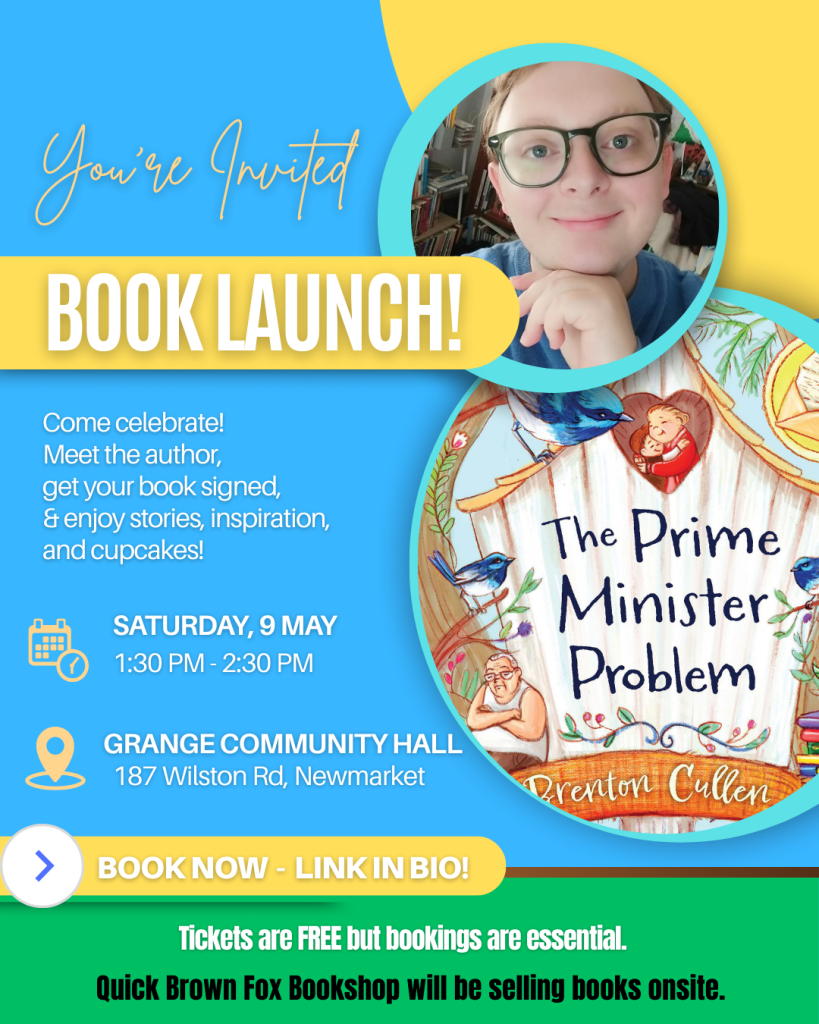
If you’re in Brisbane on 9 May, come along to the launch of The Prime Minister Problem. Tickets are free, but bookings are essential. Access more information and tickets here.
To celebrate the launch of the book, AIIP are hosting an online event with Brenton during Global Intergenerational Week on the 28th April at 10am AEST. Register here.
You can also visit Brenton online at www.brentoncullen.com or on Instagram @brenton_cullen
About the book:
When a lonely boy’s mission to save his grandmother goes viral, it sparks a movement that reshapes his country town — and everyone in it. Ten-year-old Wren has always felt invisible. Mum is busy working two jobs, his brother has his own life, and at school, Wren hides in the library with the books his grandmother taught him to love. Grandma is the only person who truly sees him — until she has a stroke and is forced to move away to a nursing home in the city. Lonelier than ever, Wren writes to the Prime Minister for help. When no reply comes, his small act of hope takes on a life of its own — and Wren discovers he isn’t the only one who feels forgotten. As his town rallies around him, Wren learns that real solutions don’t come from politicians, but from the people who call the town home. A moving story about isolation, connection, and how one quiet voice can make a difference — echoing the warmth of Old People’s Home for 4 Year Olds and the emotional honesty of Aster’s Good, Right Things. (Learn more here)